
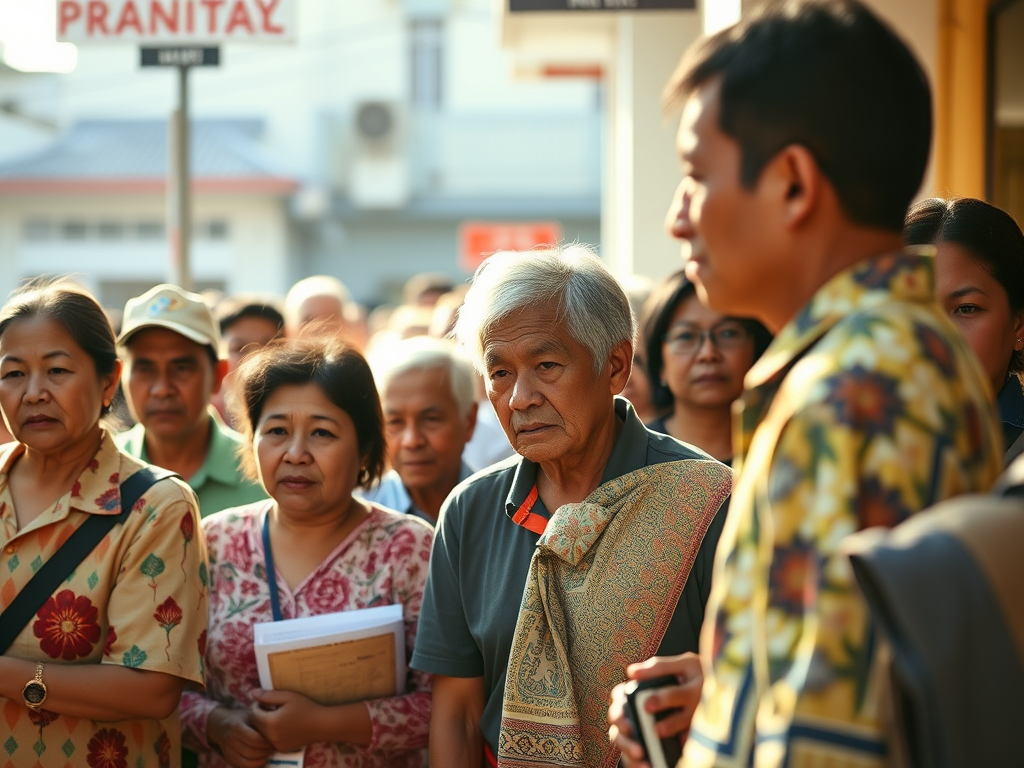

Earlier today, I saw long lines of people waiting patiently at city hall, folders in hand, receipts tucked inside envelopes—all there for one purpose: to pay their Real Property Tax. Many were rushing to beat the year’s end because paying before December 31 carries a higher discount than paying in January. The message was clear and unspoken: pay now, or pay more later.
What struck me was not the efficiency of the collection but the quiet compliance of ordinary citizens. These were not businessmen calculating profits. These were homeowners, senior citizens, heirs of family property—people paying not because their land earned them income, but because the calendar demanded it. The discount was not a reward; it was a pressure point.
That scene captures the uncomfortable reality behind the Real Property Tax as it applies to family homes.
Under the present system authorized by the Local Government Code of 1991, or Republic Act No. 7160, a Filipino who has fully paid for his house and lot—often after decades of labor, sacrifice, or inheritance—must continue paying the government every year just to keep it. Failure to do so results in penalties. Prolonged failure may lead to levy and public auction. In the end, a family can lose its home not to crime or debt, but to a tax detached from income.
This reality forces us to confront a basic moral and constitutional question: should home ownership be treated as a taxable privilege rather than a protected right?
Real Property Tax is imposed regardless of whether the property generates income. It does not ask whether the owner is employed or retired, financially secure or barely surviving. It does not distinguish between a senior citizen living on a pension and a commercial landlord earning millions from rentals. In practice, it taxes ownership itself.
This runs counter to a foundational principle of taxation recognized in law and public finance—the principle of ability to pay. The 1987 Constitution is clear. Article VI, Section 28 declares that taxation shall be uniform and equitable. Equity is not sameness. It requires sensitivity to circumstance and capacity. A tax that burdens a pensioner in a modest home in the same way it burdens a profit-making enterprise fails that constitutional test.
The Constitution goes further. Article XIII on Social Justice directs the State to give highest priority to measures that protect human dignity. Housing security is inseparable from dignity. A home is not a luxury; it is the physical space where family life, faith, and community are nurtured.
Yet under the current regime, many Filipino families—especially senior citizens, widows, and land-rich but cash-poor households—live with the quiet anxiety that unpaid taxes may one day dispossess them. This is not hypothetical. Local treasurers have the legal authority to enforce collection through levy and sale. What the law allows, practice eventually follows.
We must be honest. A tax system that results in the involuntary displacement of homeowners, even if legally authorized, violates the spirit of social justice the Constitution demands.
This is why many ordinary citizens say, only half in jest, that they do not truly own their land—that they are merely renting it from the government. That sentiment should alarm policymakers. Ownership, in its truest sense, should provide stability and security. When the State exacts payment forever, long after a property has been fully paid for, ownership begins to feel conditional.
This undermines the constitutional protection of property under Article III, Section 9, which guards against deprivation without due process and just cause. While taxation is a recognized power of the State, it must always be exercised within the bounds of reason, justice, and proportionality.
None of this is to deny the fiscal needs of local government units. Local autonomy is a constitutional policy, and LGUs require stable revenues to deliver basic services. But fiscal convenience must never override constitutional values. There are better and fairer ways to raise local revenues without putting family homes at risk.
Progressive taxation on commercial and income-generating properties is one. Higher levies on idle and speculative lands is another. Income-based local taxes, service-based fees, and national government support through enhanced and performance-sensitive National Tax Allotments are all viable alternatives. What should be categorically exempted are owner-occupied primary residences that generate no income and exist solely to provide shelter.
Exempting family homes from real property tax is not a radical idea. It is morally sound, constitutionally defensible, and socially urgent. It affirms a simple but powerful principle: no Filipino should lose a home simply for owning it.
At a time of rising prices, uncertain incomes, and a growing elderly population, reforming the Real Property Tax system is not merely a technical adjustment. It is a statement about what we value as a nation.
From the top, the view is clear. A country that taxes homes without mercy risks eroding the very foundations of family, dignity, and belonging that the Constitution itself commands the State to protect.